

experiences
Phrygian Way
The Phrygian Way, one of Türkiye’s most prominent long-distance walking routes, with an approximate length of 506 km, traces the footsteps of the Phrygians, an influential Anatolian civilization that flourished in central Anatolia between the 9th and 7th centuries BCE. Nearly 3,000 years ago, they established a powerful cultural landscape across what is today Ankara, Afyonkarahisar, Eskişehir and Kütahya.
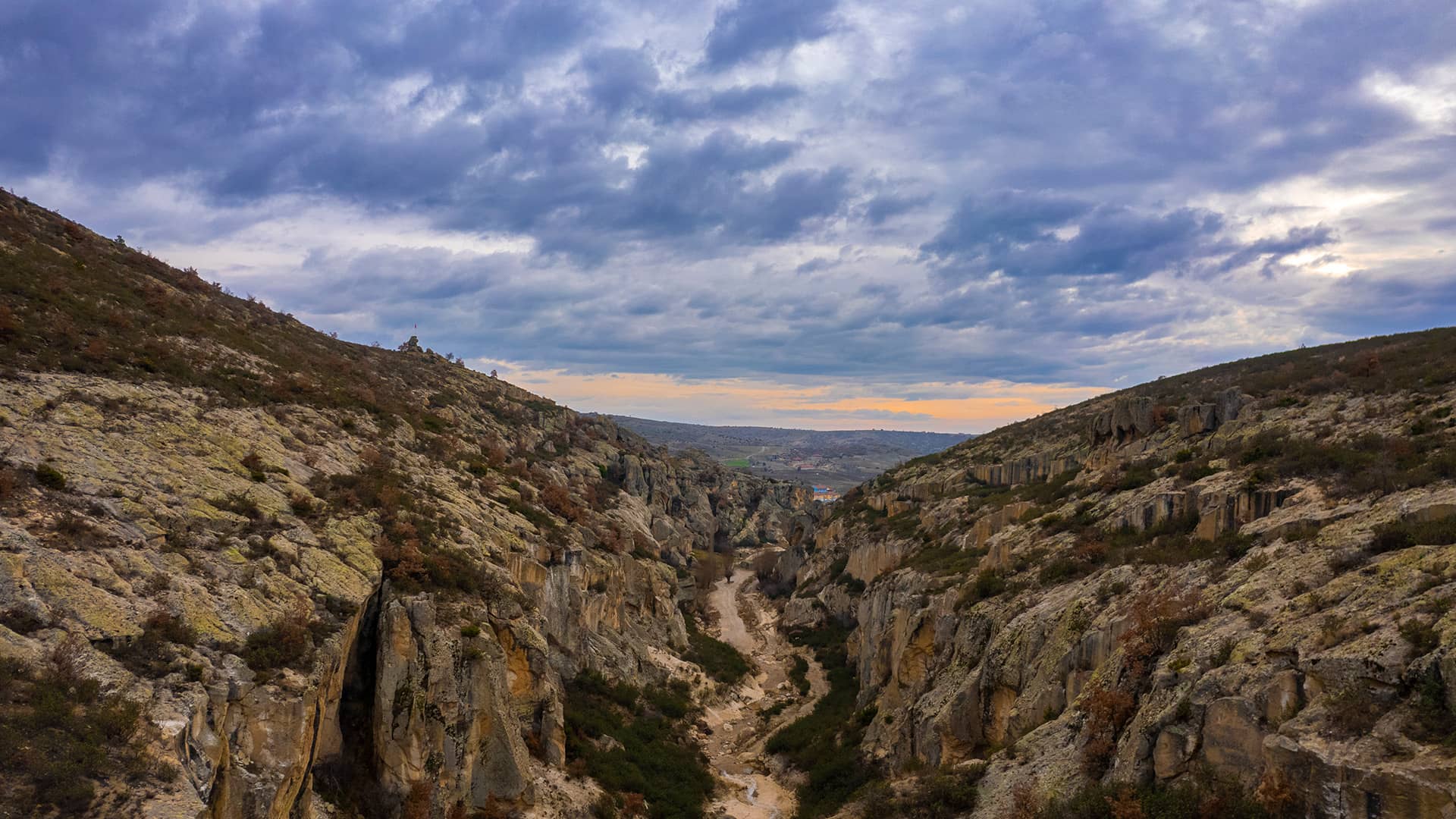
Shaped by ancient volcanic activity and sculpted over millennia by wind and water, the region’s dramatic rock spires, cave formations and fortress-like outcrops form the extraordinary terrain known as the Phrygian Valleys. Within this landscape, the Phrygians developed a distinctive artistic language and monumental rock-cut architecture, leaving enduring traces closely associated with the legendary King Midas.
Traditionally beginning at Gordion in Ankara — famed for the Gordian Knot — or from Seydiler in Afyonkarahisar and Yenice Çiftliği in Kütahya, the branches of the route converge at Yazılıkaya Midas City in Eskişehir, widely regarded as the spiritual heart of Phrygia. Along the way, travellers move through a landscape where nature and history are inseparable, and the material remains of an ancient civilisation remain within touching distance.
A Gateway to Anatolia’s Civilisations
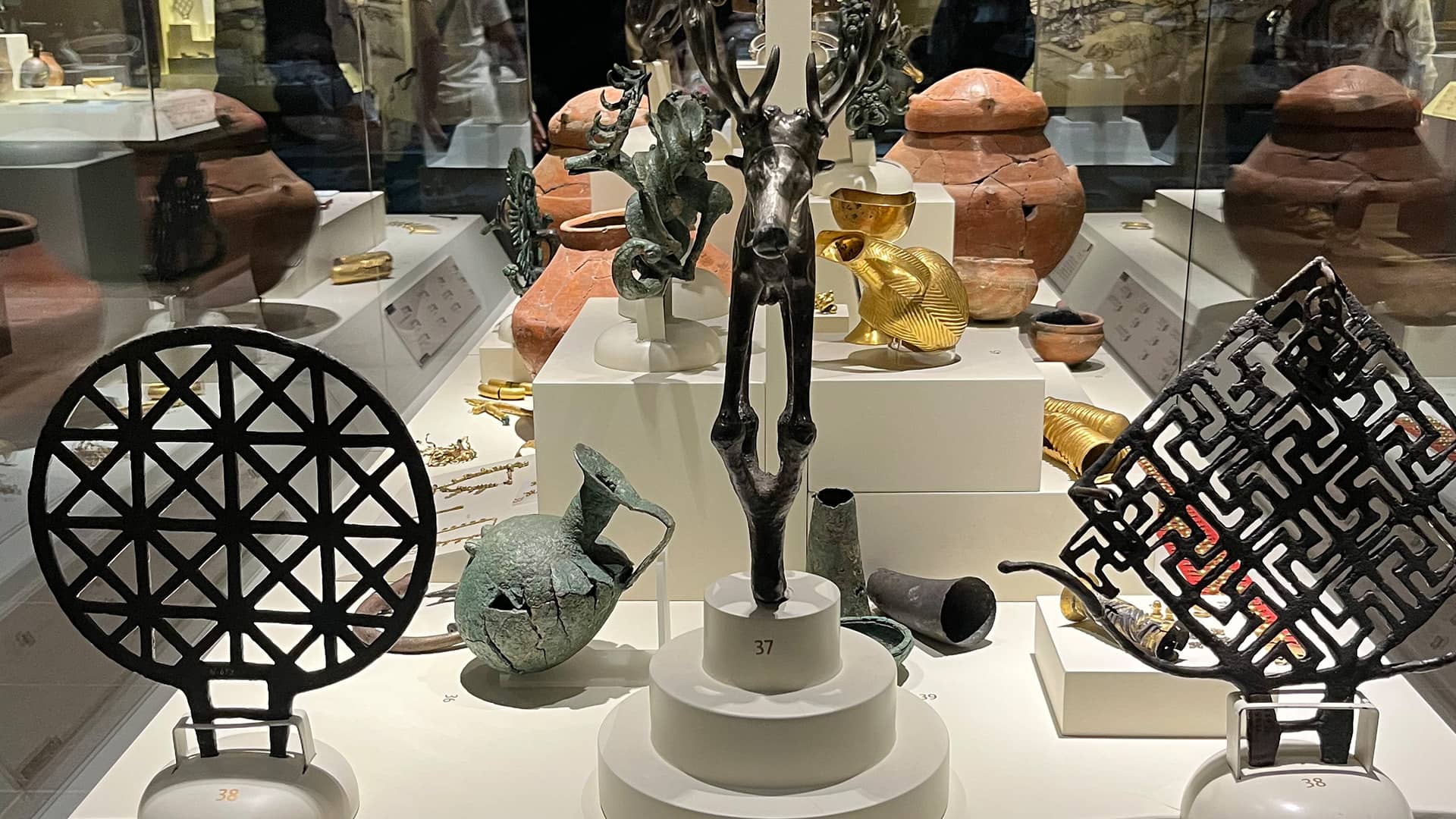
The journey begins at the Museum of Anatolian Civilisations, an essential introduction to the layered history of the region. Before stepping into the valleys, themselves, visitors encounter the refined material culture of Phrygia: tumulus finds, a reconstruction of a royal burial chamber attributed to Midas, and representations of the Mother Goddess Kybele. Here, archaeology provides the intellectual framework for the landscape that follows.
Gordion – Phrygian Heart of Anatolia
Rising from the wide Anatolian plains, Gordion served as the political capital of the Phrygian kingdom and a strategic crossroads linking Anatolia to the wider Near East. Continuously inhabited for nearly four millennia, the site preserves a remarkable sequence of cultural layers from the Early Bronze Age to the Roman period.
Its monumental citadel, megaron-type buildings and advanced timber construction techniques demonstrate significant architectural innovation of the Iron Age. More than one hundred tumuli — including the monumental “Midas Mound,” among the largest burial mounds in Anatolia — attest to the political authority and ritual traditions of the Phrygian elite. Inscribed on the UNESCO World Heritage List in 2023, Gordion stands as a rare and tangible testament to an early Anatolian kingdom whose legacy resonates through legend, archaeology and landscape.
Ayazini – Rock-Cut Life in the Phrygian Landscape
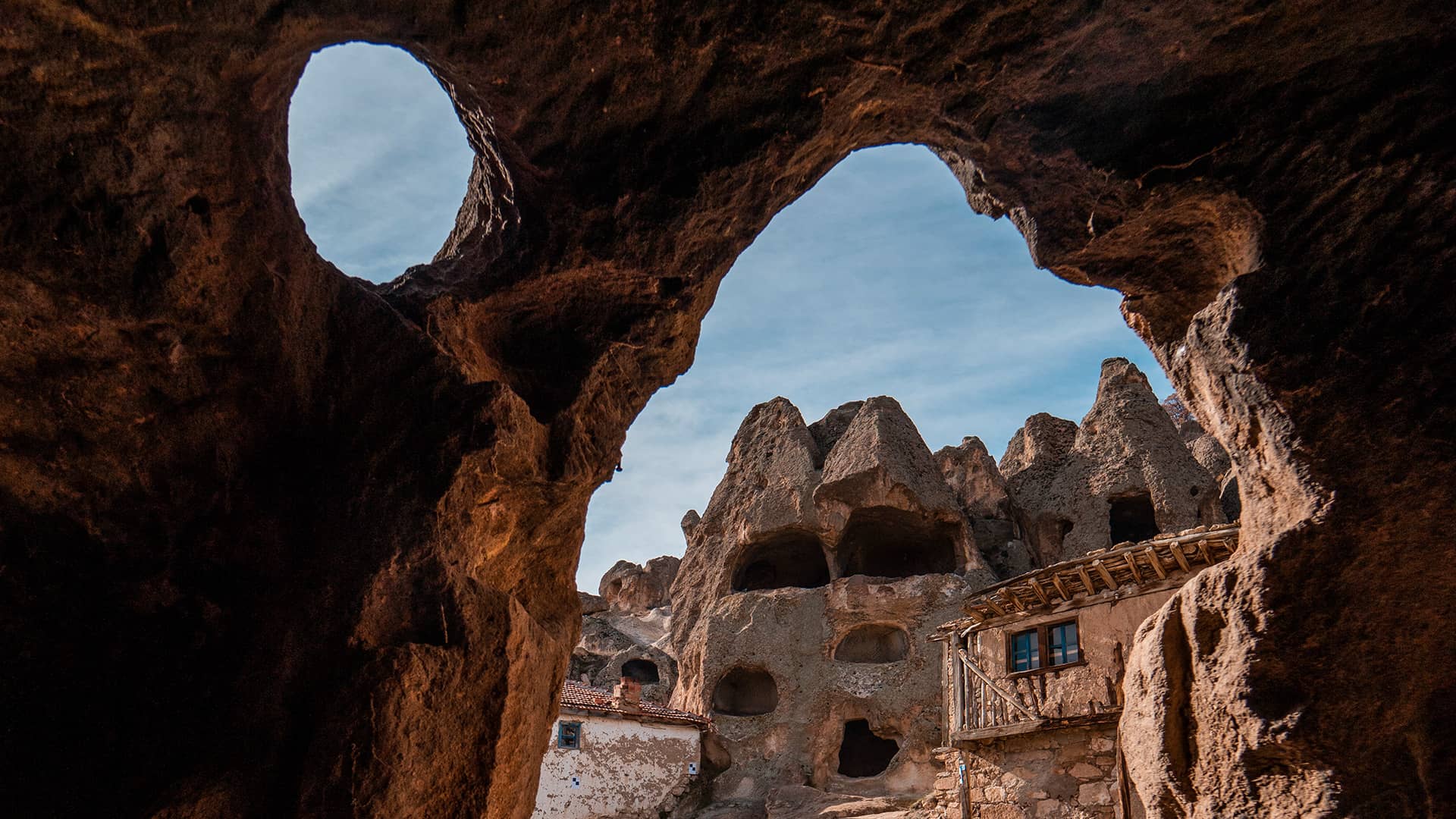
Within the dramatic valleys lies Ayazini, one of the most striking rock-cut settlements along the route.
Here, habitation, belief and landscape merge into an extraordinary open-air archive, reflecting centuries of continuity embedded within the cliffs.
Seydiler – Rock-Cut Echoes of Phrygia
Further south, Seydiler presents a quieter yet equally evocative dimension of the Phrygian world. Unlike the monumental tumuli of royal centres, this landscape reveals a more intimate relationship between community, ritual and terrain.
Rock-cut façades, dwellings and sacred niches carved into the cliffs transform the natural environment into lived and spiritual space. The horizon, elevation and stone itself become integral to cultural expression.
Yazılıkaya – The Sacred Heart of Phrygia
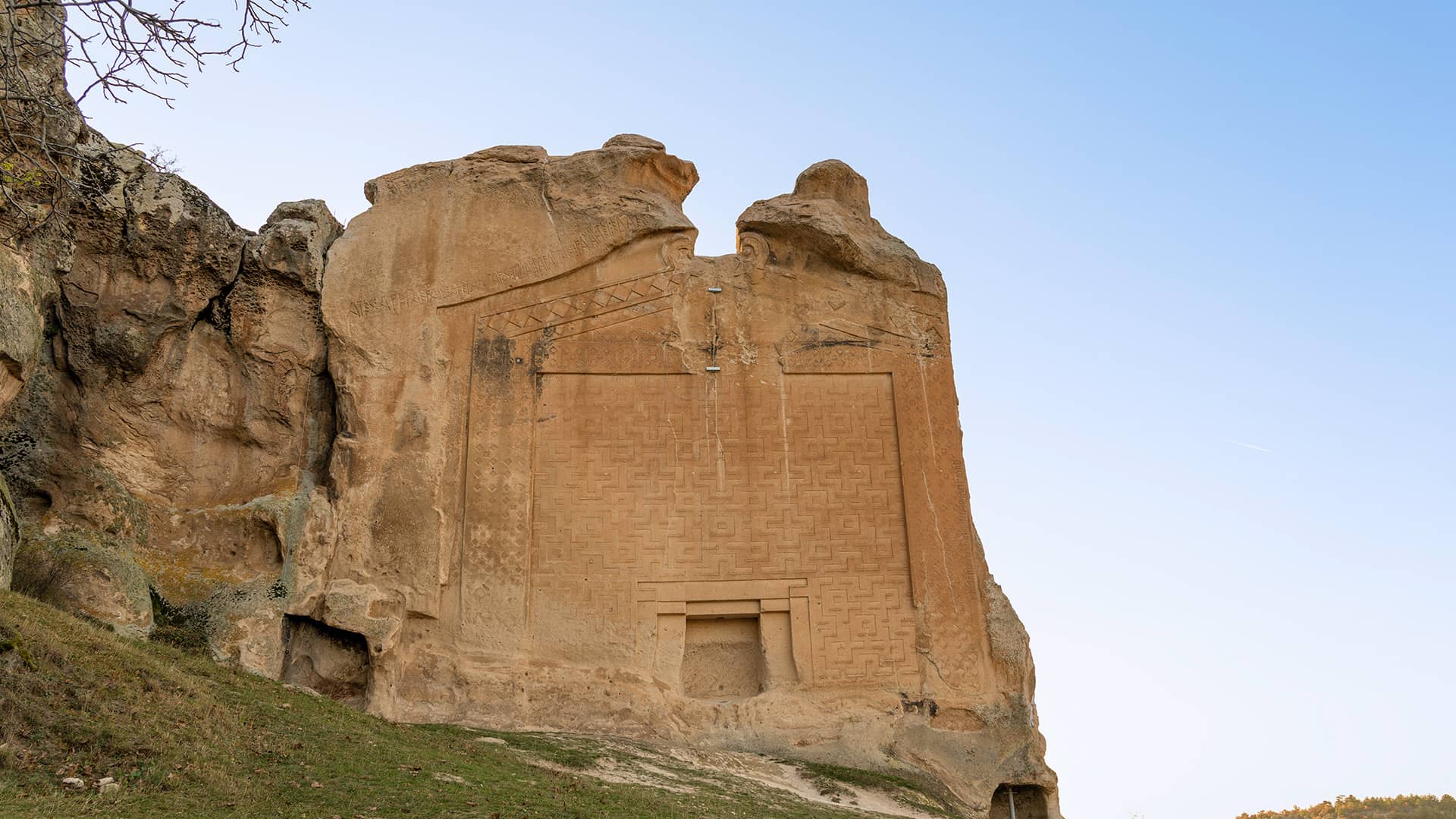
Dominating the volcanic plateau of Eskişehir, Yazılıkaya Midas City represents the spiritual culmination of the Phrygian Way. The monumental Midas Monument — a vast rock-cut façade carved directly into the cliff — reflects the ritual and symbolic dimensions of Phrygian culture, particularly devotion to the Mother Goddess.
Altars, inscriptions and carved chambers further attest to the ceremonial significance of this sacred landscape. Here, architecture becomes devotion and stone becomes scripture — marking the journey’s progression from political power to spiritual expression.
From the royal tumuli of Gordion to the rock-cut settlements of Ayazini and Seydiler, and finally to the sacred façade of Yazılıkaya, the Phrygian Way unfolds as a journey through power, daily life and belief carved into stone. More than a walking trail, it is a living cultural corridor where landscape and memory remain inseparable.
Today, travellers do not merely observe the remnants of an ancient civilisation; they move through the very terrain that shaped it — where wind, rock and ritual continue to define the horizon of Anatolia.
Worth a Detour
It Started With a Flamingo…
Beyond the rocky plateaus of the Phrygian Valleys lies Eber Lake, a vast wetland stretching between Bolvadin, Çay and Sultandağı. During migration season, flamingos gather across its reed beds and open waters, joining more than 140 bird species. Villagers harvesting reeds by boat create a rare cultural landscape where nature and tradition coexist in quiet harmony.

Phrygian Wellness
Western Anatolia is rich in thermal springs and natural spas, many valued since antiquity for their healing properties. In Afyonkarahisar, Eskişehir and Kütahya, geothermal waters sustain a legacy once described as “Healing Phrygia,” inviting travellers to rest and restore along the trail.
Historic Wooden Mosques – A UNESCO Treasure
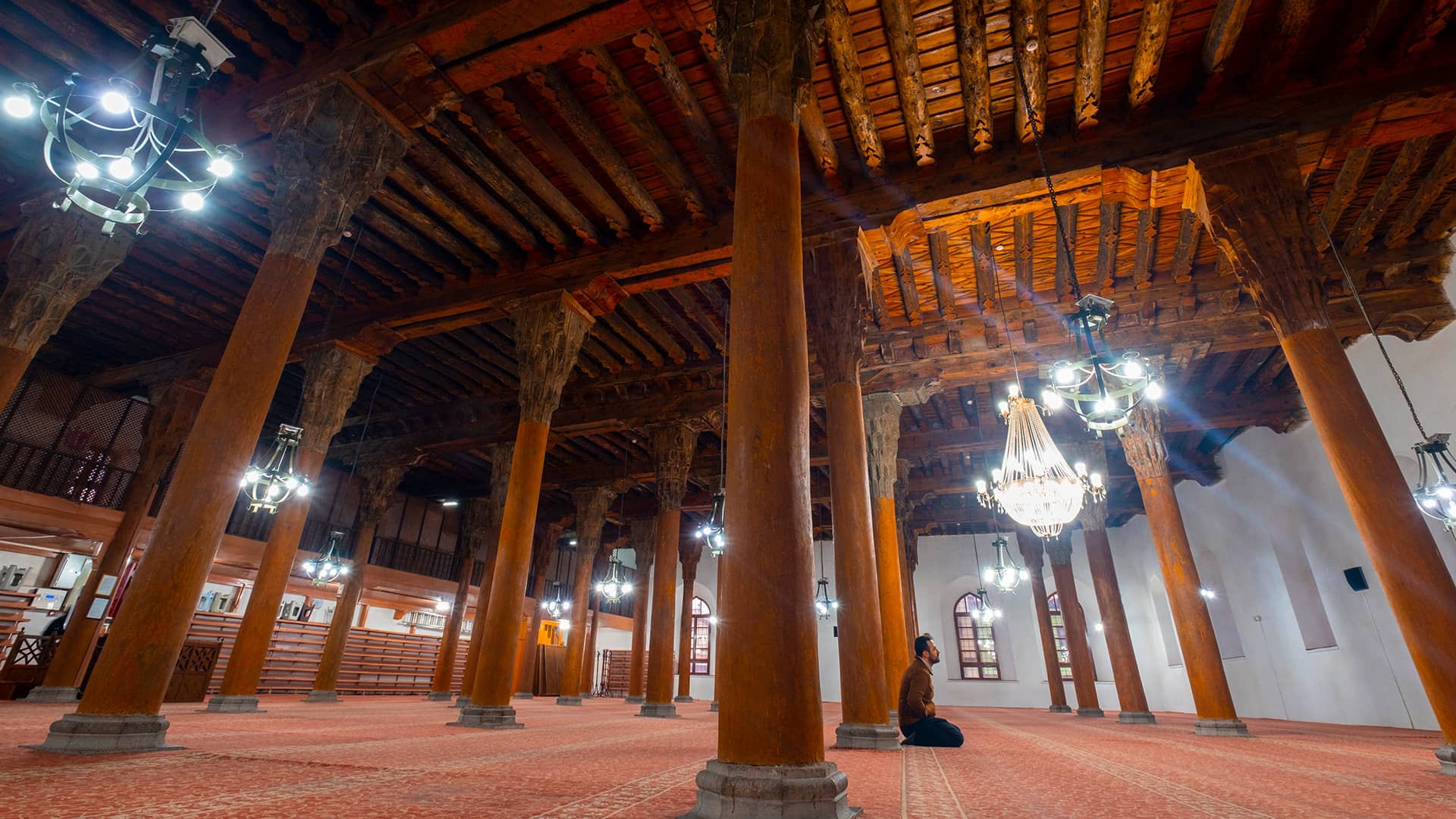
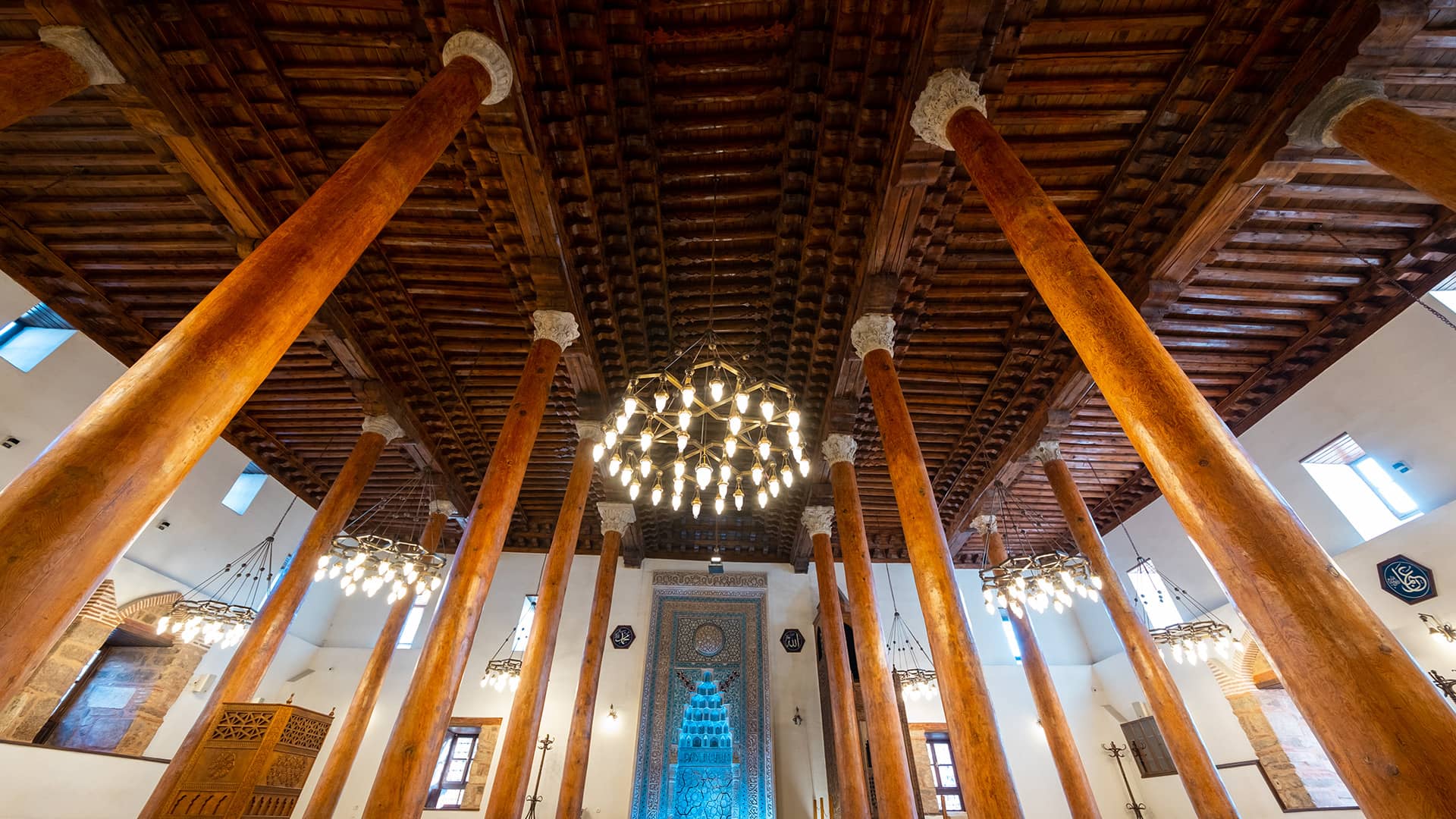
Not far from the Phrygian landscapes stand three extraordinary examples of medieval Anatolian timber architecture: the Afyonkarahisar Grand Mosque, the Sivrihisar Grand Mosque, and the Ahi Şerafeddin Mosque — also known as the Arslanhane Mosque. All three have been inscribed on the UNESCO World Heritage List since 2023 as part of the Wooden Hypostyle Mosques of Medieval Anatolia.
Built during the 13th century Seljuk period, these mosques are celebrated for their timber-supported interiors, where rows of wooden columns create serene, rhythmical prayer halls defined by proportion and light. Their preserved wooden columns and ceilings embody a rare architectural tradition in which craftsmanship, faith and material knowledge converge.
Here, wood becomes structure, devotion becomes space, and architectural continuity bridges the Seljuk world with the deeper historical layers of Anatolia — including the ancient landscapes of Phrygia.
The Delicate Craft of Sepiolite
In Eskişehir, the soft white mineral sepiolite — locally known as lületaşı — has been shaped into refined objects for centuries. The most celebrated creations are intricately carved tobacco pipes, preserved and exhibited at the Lületaşı Museum, reflecting a living artisanal heritage.
A Taste of the Phrygian Region
After long walks across volcanic valleys and ancient stone paths, the flavours of the region offer their own form of discovery.
In Eskişehir, Çibörek — a crisp, half-moon pastry filled with seasoned meat — remains a beloved local specialty, reflecting the culinary heritage brought by Tatar communities to the city. For dessert, Met Halvah, rooted in winter traditions, provides a nostalgic and delicate finish.
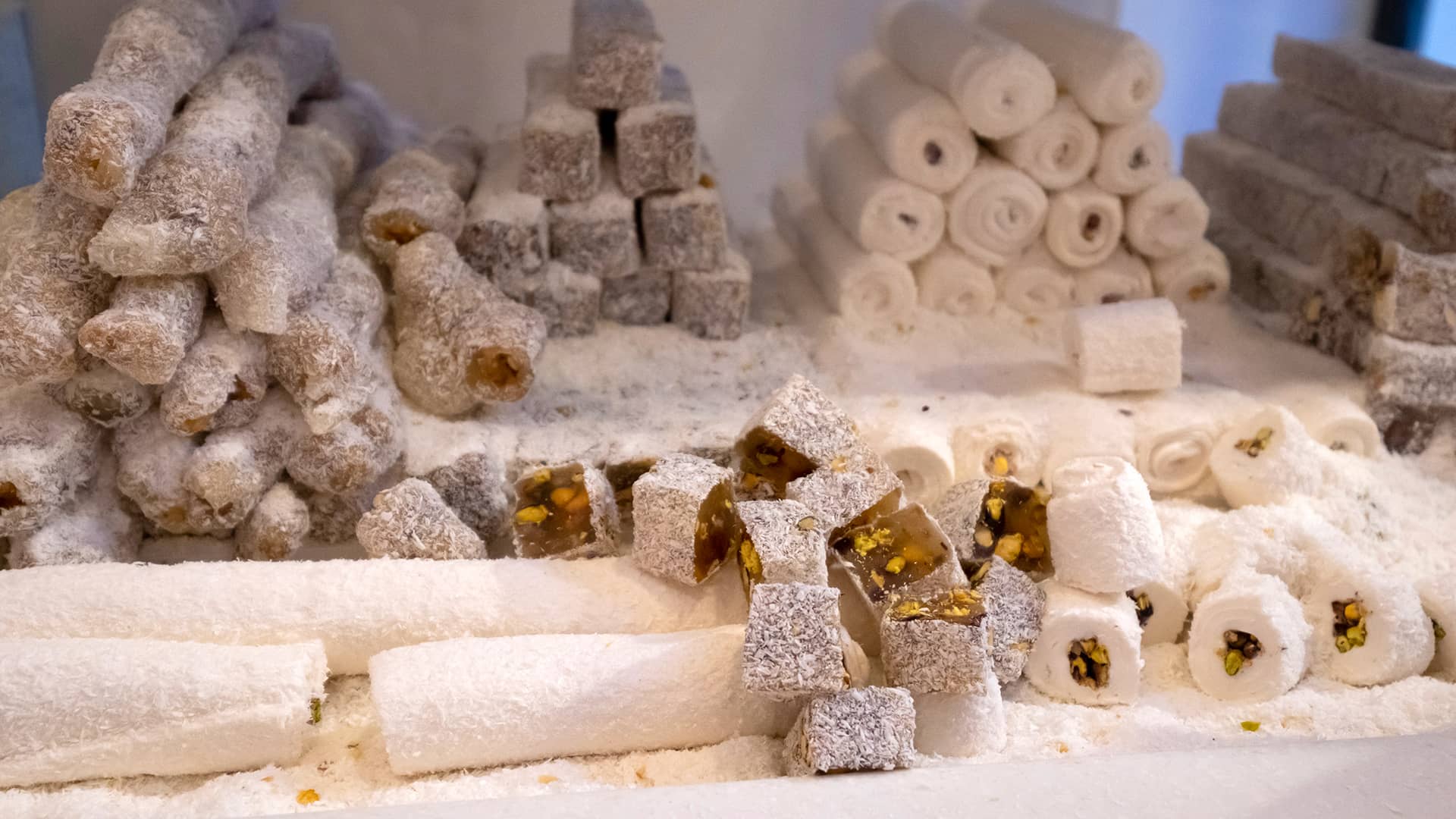
Yet the gastronomic richness of the Phrygian landscape extends further south to Afyonkarahisar, recognised by UNESCO as a Creative City of Gastronomy since 2019. Renowned for its centuries-old culinary traditions, Afyonkarahisar is celebrated for its richly layered cuisine, distinctive sucuk (spiced sausage), kaymak (clotted cream), and its world-famous lokum. These confections, crafted with care and patience, have become emblematic of the city’s artisanal food culture.
Together, these flavours transform the Phrygian Way into more than a cultural and natural journey — they reveal a living culinary landscape where history is tasted as much as it is seen.
Kütahya Ceramics
Kütahya is one of Türkiye’s most important centres of traditional ceramic and tile-making, with a craft tradition dating back centuries. Designated a UNESCO Creative City in Crafts and Folk Art in 2017 and included in the European Route of Ceramics in 2024, the city continues to keep its vibrant ceramic heritage alive through its artisan workshops and distinctive designs.